
Transport and logistics: 5 reasons it’s an industry of the future
Many people think about career choices and wonder which sector will still offer jobs in the future. The transport and logistics sector is one of the strongest answers to that question. In this article we give five concrete reasons why the sector is a good choice for the workers of the future.
1. Goods always need to move
However the world changes, goods still have to get from one place to another. Food to the shops, medicines to the pharmacy, building materials to work sites and parcels to the doorstep. The transport and logistics sector is the backbone of Finland’s economy, and its importance isn’t shrinking.
The growth of online shopping has increased the need for transport even further. The more people order online, the more drivers, warehouse workers and logistics specialists are needed.
2. The driver shortage means good job prospects
Finland has a real shortage of skilled drivers. Many professionals in the sector are approaching retirement age, and there aren’t enough new workers coming in to replace them. That means people working in the sector have excellent job prospects. There’s work available, and the pay is competitive.
The driver shortage isn’t just about lorry drivers. Bus drivers, delivery drivers and logistics professionals are needed in every municipality in Finland.
3. Technology is transforming the sector
The transport and logistics sector isn’t standing still. Electric vehicles, AI-optimised routes, automated warehouses and digital tracking systems are constantly changing the work. Professionals entering the sector get to work with modern technology.
That doesn’t mean machines are replacing people. A driver’s skill, situational awareness and sense of responsibility can’t be automated. Technology is a tool that makes the work more efficient and more meaningful.
4. Varied career paths
The transport and logistics sector isn’t just one type of job. You can work as a driver, warehouse manager, logistics planner, freight forwarder, traffic controller or in customer service. You can specialise in transporting dangerous goods, timber haulage or public transport.
Many people start as drivers and later move into supervisory roles or start their own company. Quite a few professionals in the sector are entrepreneurs, building their own business on their own terms.
5. Work that matters
A professional in the transport and logistics sector knows their work has a real, visible impact. Without drivers, shops would run empty, hospitals would run out of supplies and factories would grind to a halt. It’s work whose results you can see.
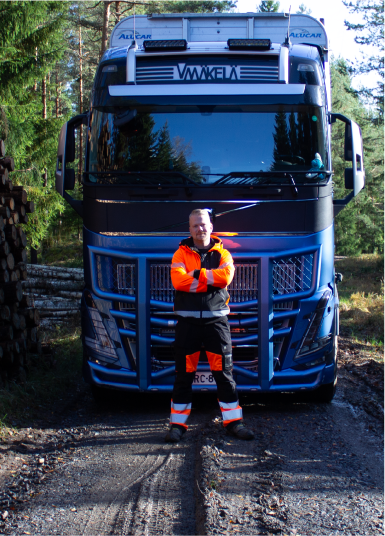
As Ville Mäkelä, a timber lorry driver from Huittinen, put it: “If it wasn’t for us timber lorry drivers, the toilet paper would run out of the shops pretty quick.” Simple, but true.
How do you get into the sector?
There are several routes into the transport and logistics sector. Vocational colleges offer the Vocational Qualification in Logistics (upper secondary vocational qualification), which includes a driving licence and professional competence (CPC). Studies typically take 2–3 years.
Many people start by getting a taste of the sector through work experience (TET). It’s a risk-free way to see what the work actually looks like. On the Hyppää kyytiin (Hop on board) website you’ll find TET placements directly from companies in the transport and logistics sector.
Frequently asked questions
Is the transport and logistics sector a safe choice?
Yes. The sector is essential to how society functions, and the need for skilled workers is growing. Employment prospects are excellent.
Will AI replace drivers?
Autonomous vehicles are still a long way from replacing professional drivers. Technology supports the work, but people are still needed.
How much do you earn in the sector?
Pay varies depending on the role and experience, but the sector pays competitively. The driver shortage is pushing pay levels up.
Is the sector suitable for women?
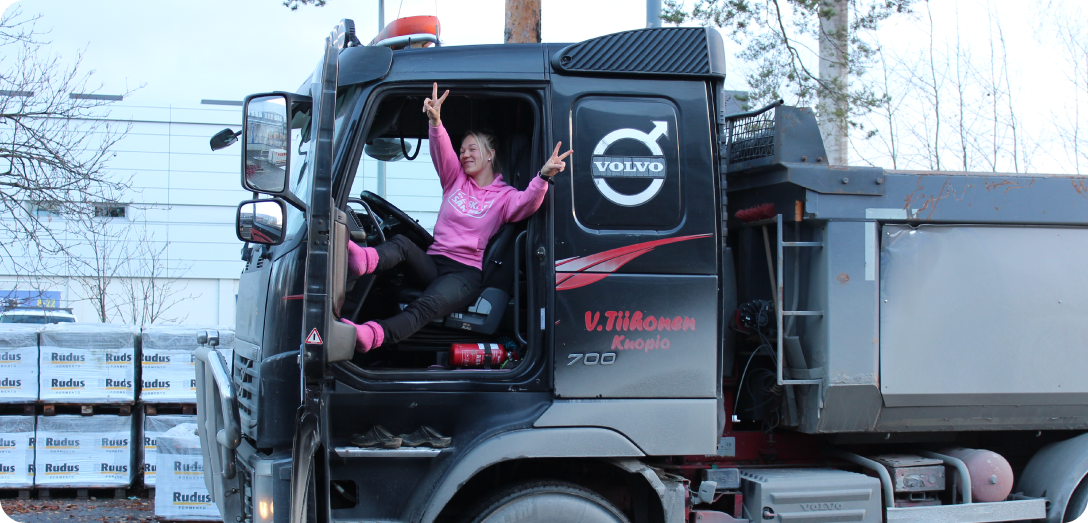
Absolutely. The sector is more diverse than before, and the number of women drivers is growing. Miina Soini, an articulated lorry driver (HGV driver), says her experience has been “really positive”.
Find your own route into the sector
The transport and logistics sector offers a stable future, varied career paths and work that matters. If the sector interests you, the best way to find out more is to try it yourself.
Find a TET placement in transport and logistics and see for yourself why people in the sector love their work.
Watch videos from professionals and hear their stories.
Muita kiinnostavia artikkeleita
How to organise a successful TET placement at a transport and logistics company? A practical guide for employers, from induction to safety.

What is a TET work-experience day like in transport and logistics? Explore varied TET placements and hear what professionals say about their jobs.

How do you become a professional in transport and logistics? Read about training paths, driving licences and professional competence.